
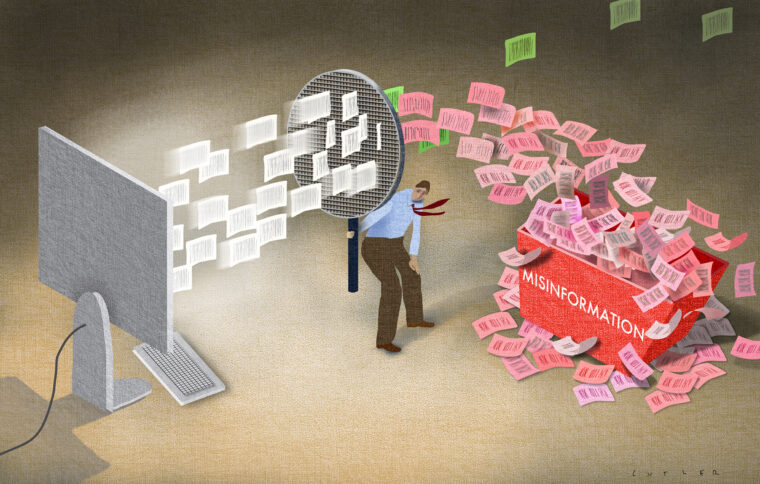
Misinformation is something we should always avoid as the flow of information in cyberspace is intense. From various social media, we can get so much information but not all of it is valid.
Spreading hoaxes and misinformation are the main issues in online information traffic. This article will explain the steps to avoid these issues.
Why is Misinformation a Serious Issue Now?
These days, the possibility of misinformation is increasingly frequent and has become one of the serious issues that we must anticipate. Many platforms can be a source of misinformation including social media that many people use today. The more hoaxes spread and the higher the level of misinformation, it can lead to a crisis of trust.
Communication is both the source of misinformation and the solution. Technological developments can even exacerbate this issue. Some parties use things that are not necessarily true for commercialization. The information is deliberately spread to increase exposure.
All countries need to provide education on digital literacy. If communication is managed properly, the benefits can be effective in overcoming misinformation.
Those who work in journalism must ensure quality output. Every fact must be verified before publishing. The government also needs to take part in ongoing efforts to overcome misinformation and hoaxes.
How To Avoid Misinformation?
The spread of misinformation can cause many problems. Everyone needs to work together to prevent misinformation, including ourselves. So how can we avoid misinformation? Check out the following points to find out the best practices:
1. Don’t share if not verified
Whatever information you receive, especially crucial ones should be verified first. Sharing information without verifying it can lead to misinformation. Find out where the information comes from, and make sure it comes from a trusted source.
Avoid news from websites that are not credible. At least you don’t need to spread the information if the source is unreliable.
2. Rely on verification tools
You can also use verification tools to make it easier to find the truth of information. You can quickly find out whether the information is true or a hoax with this tool. There are several tools you can use including FactCheck.org.
3. Check the publish date
Make sure you only read the latest news. If you read news that has been published a long time ago, it is not necessarily true for now. There are many changes in the news cycle, it is important to be updated on the latest news to avoid misinformation.
Some outdated news can reappear and it can make readers misunderstand the topic. So, first, check the publish date of the article to avoid inaccurate information. If you find old news, you can search for updates.
Some old news stories were corrected to make them more valid. Even if it’s just a simple revision, it can significantly change the context. If outdated information reappears, it could be false because it has been debunked before.
4. Find supporting evidence
Quotes or trusted sources can be supporting evidence for a story. There is usually a link to access additional information so that readers can verify the truth of the news. But not all platforms provide this feature, some only provide news without including adequate evidence.
Statistical information can clarify a fact or support a claim. Study the statistics so you can be more confident in the information. Usually, if the news source is anonymous, there is not enough supporting evidence.
5. Understand from multiple perspectives
Personal bias is one of the factors for misinformation. Some people tend to believe in information that we have always believed in or is in line with our usual views. To be wiser in reading the news, try to challenge yourself to look for other perspectives in learning information.
You can try discussing with other people who have similar interests or needs. Talk about the topic and ask them what they think. By understanding other people’s views, you can gain a broader perspective and avoid misinformation.
What are the Signs of Misinformation?
Misinformation often has certain recognizable patterns. Here are the signs to look out for:
Recognizing the signs of misinformation is crucial to help us sort out the right information from the wrong, especially in this digital age where news and content can spread quickly without filters. Here’s an in-depth explanation of the four main signs of misinformation:
1. Inconsistency
If something is inconsistent when you compare statements, facts, and statistics, it could be a source of hoax information. You need to be skeptical of statistics that are too exaggerated, especially if they are not accompanied by sufficient explanation. Consider comparing the statement or fact with other sources.
2. Photo/video manipulation
One of the technological threats to misinformation is photo/video manipulation such as deepfakes. Visual evidence is more likely to influence the public. You need to confirm the authenticity of the photo with certain tools such as Google Reverse Image Search.
While there are sometimes manipulations that appear willing, there are still certain details that indicate it is an artificial photo.
3. Without reference support
If there is no clear source to back up the news, you need to be skeptical of it. Some articles are simply posted without listing the institution or author and that is best avoided. As a credible source of information especially about computer technology, you can visit Alfintechcomputer.com.